Why DIY Asbestos Removal is a Risk Homeowners Can Never Afford to Take
Removing asbestos may appear to be an easy task but it is one of the hazardous materials that require special protective equipment. On paper, it’s like taking out the trash: remove the old sheeting, put it in bags and then carry it out. In reality, making a single mistake can lead to health issues for several decades and thousands of dollars in restoration costs.
Around 4,000 Australians die each year from asbestos-related diseases. Unfortunately, the majority of these people do not know that they have had contact with the substance until it’s too late. Asbestos does not give any warning signs. It does not have any smell and doesn’t look harmful when it is in a wall or beneath old lino. Also, the consequences of exposure come to light after 20 to 50 years. When someone is diagnosed with mesothelioma, they have had exposure to asbestos many decades ago. This is one of the reasons homeowners may underestimate the risks and try to remove it themselves.
Why so many Sydney homes are still a problem
If your house, or any bit of it, was built pre-1990, there’s asbestos in there somewhere. Fibro – asbestos cement sheeting – was the wonder-material of post-war Australian building: eaves, external cladding, internal wet areas, garages, sheds. It was cheap, fire-resistant, easy to work with. Which is why builders loved it and why so much of it is still sitting in walls and ceilings across Sydney’s older suburbs.
Not all asbestos is born equal. Non-friable asbestos – ‘locked’ in cement sheeting, for example – is fairly stable if left undisturbed. Friable asbestos, crumbly, degraded, or damaged material, can release fibers into the air with the lightest of touches. The three fiber types referred to in health and safety literature are chrysotile, amosite, and crocidolite, more commonly known as white, brown, and blue asbestos. Crocidolite is the most dangerous of the three, but all carry serious long-term health risks. None of it is something you can eyeball. You need testing to know what you’re dealing with, and testing is where most DIY jobs skip a step they shouldn’t.
The renovation boom is driving accidental exposure
Most individuals do not intend to "do an asbestos job". Their intention is to refurbish a bathroom, remove old floors, or demolish a wall in a house constructed in the 1960s or 70s. Somewhere along the way, they drill, sand, or crack a sheet of fibro without realizing what it is. The damage is done before they even recognize it.
This is the primary cause of residential asbestos exposure in Australia. The current renovation boom in older homes has resulted in more walls being dismantled, old fittings being removed, and homeowners being more likely to disturb materials they believed to be "just old cement sheet." The material itself poses no threat until it is cut, drilled, sanded, snapped, or dropped. This is the stage when fibers become airborne, and being airborne is the most critical condition for your lungs.
Removal isn’t the hard part – containment is
Here’s the part most DIYers get wrong: getting the material out of the house isn’t actually the difficult step. Keeping the fibers from spreading while you do it is. Once asbestos-containing material is disturbed, invisible fibers are already in the air, on your clothes, on your tools, on the floor around you. Sweeping it up, vacuuming it with a standard vacuum, or brushing debris into a pile – all standard instincts for cleaning up a mess – actively spreads the contamination further instead of containing it.
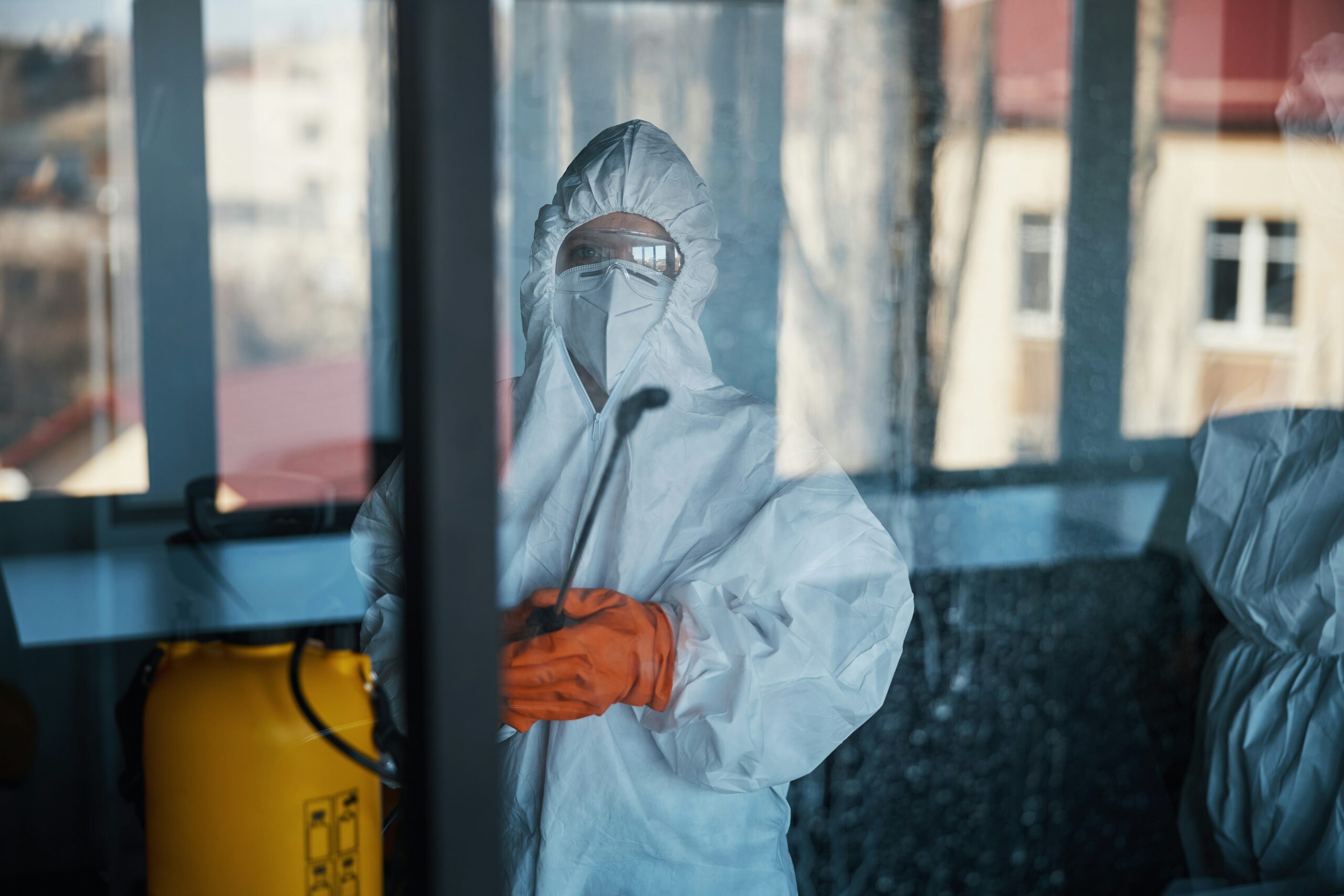
Professional teams work wet for a reason. Wetting ACMs before and during removal suppresses fiber release, which is why licensed removalists use fine water sprays and controlled techniques rather than dry-cutting or dry-breaking material. They also wear P2 respirators and disposable coveralls, not because it’s procedure for its own sake, but because it’s the only barrier standing between a job site and a set of lungs. Most DIYers either skip PPE entirely or use the wrong kind, which offers a false sense of protection while doing almost nothing against fibers this small.
The legal chain most DIYers never see
Professional asbestos removal is more than "put on a mask and pull it out". There’s a chain of custody around how it’s managed for good reason – unsafe handling has caused untold harm over the years. The material is wetted, double-bagged, and labeled correctly. It gets transported under controlled conditions to a licensed landfill approved by environmental authorities, with paperwork tracking where it went and confirming it was handled properly the entire way.
Safe Work Australia codes make it clear how things should go to landfill – you can’t just throw that DIY bag straight in the back of the ute after lunch. State environment regulators, who are generally responsible for the landfill side of the equation, enforce this rigidly and illegal dumping of asbestos waste can attract significant penalties alone. This isn’t red tape for its own sake. It exists because asbestos dumped in general waste, or buried in a backyard, or left in an unmarked pile, becomes someone else’s exposure risk down the track – a garbage collector, a future homeowner, a kid playing in a yard years later.
This is also the point where hiring a licensed provider becomes less about compliance and more about basic risk management. A team offering Asbestos Removal Sydney will handle testing, containment, removal, and disposal as one continuous, accountable process, rather than a string of separate steps a homeowner has to somehow get right on their own with no training and no equipment built for the job.
Cross-contamination: the failure mode nobody sees coming
This aspect is often overlooked in DIY guidelines, but it is potentially the most harmful. Asbestos particles do not remain in the targeted area. They spread via shoes, clothing, skin, hair, tools, and even pets that move around the worksite. A homeowner who spends some hours removing old fibro sheeting from the garage can inadvertently transfer particles to carpets, furniture, and bedding in the house.
Children and partners who never entered the work area can be exposed. It is impossible to contain asbestos "well enough" using unskilled labor. Either the site is isolated, sealed, and professionally cleaned, or you find the fibers elsewhere in the home. This is a major reason why a small DIY job often results in contamination of the entire property and why the cost of rectifying the mistake far exceeds the original cost of professional removal.
What "technically legal" doesn’t mean
Many homeowners are unaware that small-scale removal of non-friable asbestos is, in some cases, legally permissible for a property owner to carry out themselves. Unfortunately, there is nothing safe about it. The legal threshold is based on practical and economic considerations. Regulators are not able to monitor every small job at every household. This doesn’t mean, however, that non-friable asbestos is harmless when it is disturbed.
Something being legal and something being safe are two completely different matters. A homeowner might be legally allowed to remove a small piece of fibro without holding a license but might still expose themselves and their family to tiny fibers that are invisible, odorless, and undetectable at the time of inhalation. This realization might only come decades later. "I’m allowed to do this" doesn’t mean "this is a good idea".
What clearance certification actually proves
Once a licensed removal is finished, it’s not officially "finished" until air monitoring and clearance certification have been completed and the property has been deemed safe for re-occupancy. This step is 100% skipped in any kind of DIY job, because the vast majority of homeowners don’t even know there’s such a thing.
It’s the difference between assuming a space is safe and actually having documented proof that it is. That certificate is your proof of safety beyond a shadow of a doubt. It also matters for resale. It matters if a dispute ever comes up with a buyer, an insurer, or a contractor. The homeowner who did their own asbestos removal five years ago has no leg to stand on in that conversation, and the issue can quietly sit and wait till it’s somebody else’s hundred-thousand-dollar problem.
The real cost comparison
Let’s be honest. Professional removal costs money upfront, we won’t deny that. However, if DIY removal goes sideways, it could lead to decontaminating an entire house rather than just the room containing the asbestos. You could be fined by environmental regulators for improper disposal. You could become a health liability that no insurance policy covers because no one insures for a disease that may or may not develop in twenty years.
The math doesn’t work out on that one in favor of DIY. Yes, the saving is real but it’s minuscule compared to the liability on the other side if something goes wrong – and with asbestos, you often won’t have any idea something has gone wrong until it’s too late to do anything about it.
What to actually do if you suspect asbestos
If you’re mid-renovation and hit something that looks like old cement sheet, insulation, or flooring you can’t identify, stop. Don’t cut it, sand it, or try to pull it out to "have a look." Isolate the area, keep people and pets away, and get a licensed assessor to test it before anything else happens. That single pause – stop, isolate, confirm – is the cheapest insurance policy available, and it costs nothing but a bit of patience.
An asbestos register, standard practice in commercial workplaces, is a useful habit for homeowners too. Even a simple written note of where suspected or confirmed ACMs exist in a property saves the next renovation, the next tradesperson, or the next buyer from walking into the same uncertainty you did.
Asbestos doesn’t reward confidence or good intentions. It rewards caution, containment, and a process that’s been tested and regulated for exactly this kind of risk. Handling it yourself might feel like a smart way to save a weekend and a few hundred dollars, but it’s a bet against your own health with odds that don’t show themselves for years. That’s not a bet worth making on a renovation budget.